
Amazon FBA
How to Start Amazon FBA in the USA

Starting Amazon FBA in the USA means learning a sequence, not buying a pile of products because a video looked exciting. You choose something people already search for, confirm you are allowed to sell it, find a supplier who can make or supply it reliably, list it accurately, and send a careful first shipment into Amazon’s fulfillment network.
Fulfillment by Amazon is the part where Amazon stores units and ships customer orders. It is not a product idea and it is not a promise of sales. If you want the plain definition first, read what Amazon FBA means for a new seller. This page is the starting sequence around that definition. If online selling itself is still new, read e-commerce basics for beginners before you spend on inventory.
This guide is educational. Amazon’s rules, fees, and account requirements change. Use Seller Central and Amazon’s own help pages for current requirements. Nothing here guarantees approval, ranking, or income.
What Amazon FBA is
Amazon FBA means you send products to Amazon’s warehouses. When a shopper buys the listing, Amazon picks, packs, and ships the order, and it handles many routine delivery questions. You still own the product choice, the supplier relationship, the listing, the price, and the account.
That split is useful for a beginner who does not want to pack every order at home. It is also easy to misunderstand. A warehouse does not create demand. If the product is a poor fit, restricted, or priced below your real costs, FBA only stores the mistake.
Some sellers ship orders themselves. Some use FBA only for part of their catalog. Starting in the USA usually means selling on the Amazon.com marketplace and following the rules that apply to that account, including identity checks, tax settings, and product restrictions. Those checks are separate from the fulfillment method.
Basic requirements before you buy stock
Treat the first week as a readiness check, not as a shopping trip.
A seller account you can actually use
You need an Amazon seller account in good standing, with identity and tax information that matches your real situation. Professional and individual plans differ in monthly fees and features. Read the current plan comparison inside Amazon rather than relying on a blog screenshot. Do not share login codes, bank passwords, or identity documents in public chats.
A product you are allowed to sell
Some categories, brands, and product types need approval, invoices, or safety documentation. Others are gated, hazmat, or simply a poor fit for FBA because of size, melting, expiration, or shipping limits. Confirm eligibility before you pay a supplier. Discovering a restriction after the goods are on a boat is an expensive lesson.
A way to receive, prep, and pay
You need a practical path for samples, labels, and the first inbound shipment. That might be your home, a prep partner, or a supplier that cartons goods to Amazon’s instructions. You also need money for product cost, freight, fees, and a reserve for returns. Forming a company can help with banking later, but it does not open a seller account by itself. If you are sorting company structure separately, the educational overview is USA LLC basics for online sellers, and the service details live on Virginia LLC formation.
Product research that survives contact with reality
Research is the work of finding a product a real buyer already wants, at a price that can still leave room after costs. Start narrow. One product category you understand is more useful than a list of fifty “winning” items copied from social media.
A practical research pass asks four questions:
- Is there visible demand? People already search for the item or a close problem. You are not inventing a market from a slogan.
- Can you tell products apart? If every listing looks identical, you need a real reason a shopper would choose yours: materials, size, bundle, or clearer instructions.
- Is the item practical to ship and store? Very large, fragile, seasonal, or regulated products punish beginners. A simple, durable item is easier to learn on.
- Do the rough numbers work? Product cost, freight, Amazon fees, returns, and a small ad budget all belong in the estimate before you place a production order.
Write the customer in one sentence. “A renter who wants a compact shoe organizer that fits a narrow closet” is a research target. “Everyone who likes home products” is not. If you cannot name the buyer, you are not ready to request a quote.

Supplier considerations
The supplier quote is not the full cost, and the factory photo is not proof of quality. Ask for a sample and use it the way a customer would. Check seams, smell, instructions, packaging, and whether the item matches the listing you plan to write.
What to confirm in writing
- Unit price at the quantity you will actually order, not only at a huge volume you cannot afford
- Lead time for samples and for the production order
- Who pays for freight, duties, and labeling
- What happens if a batch arrives damaged or different from the sample
- Whether the supplier can reprint packaging if you change a detail after the first test
A common beginner trap is ordering the minimum that earns a discount, then discovering the product is slightly wrong. A smaller first order that matches the sample is usually a better teacher than a discounted container you cannot sell.
Also separate wholesale resale from making your own version of a product. Those are different sourcing models. This page assumes you are preparing inventory you will send to FBA. It does not tell you which sourcing model is universally better.
Product listing basics
The listing is the promise. Title, bullets, images, and the back-of-package details should describe the item that will arrive in the warehouse and in the customer’s hands. If the sample has three pieces, the listing should not say five. If the material is plastic, do not call it wood.
Useful listing habits for a first product:
- Lead with what the product is and who it is for, in ordinary language.
- State size, quantity, materials, and what is not included when those facts prevent returns.
- Use photos of the real product, including a simple scale reference if size is easy to misunderstand.
- Avoid medical, safety, or “best” claims you cannot support.
- Match the barcode, variation, and package contents to the inventory you will ship.
Copying another seller’s bullets is a fast way to publish claims you cannot stand behind. Write from the sample on your desk.
Sending inventory to Amazon
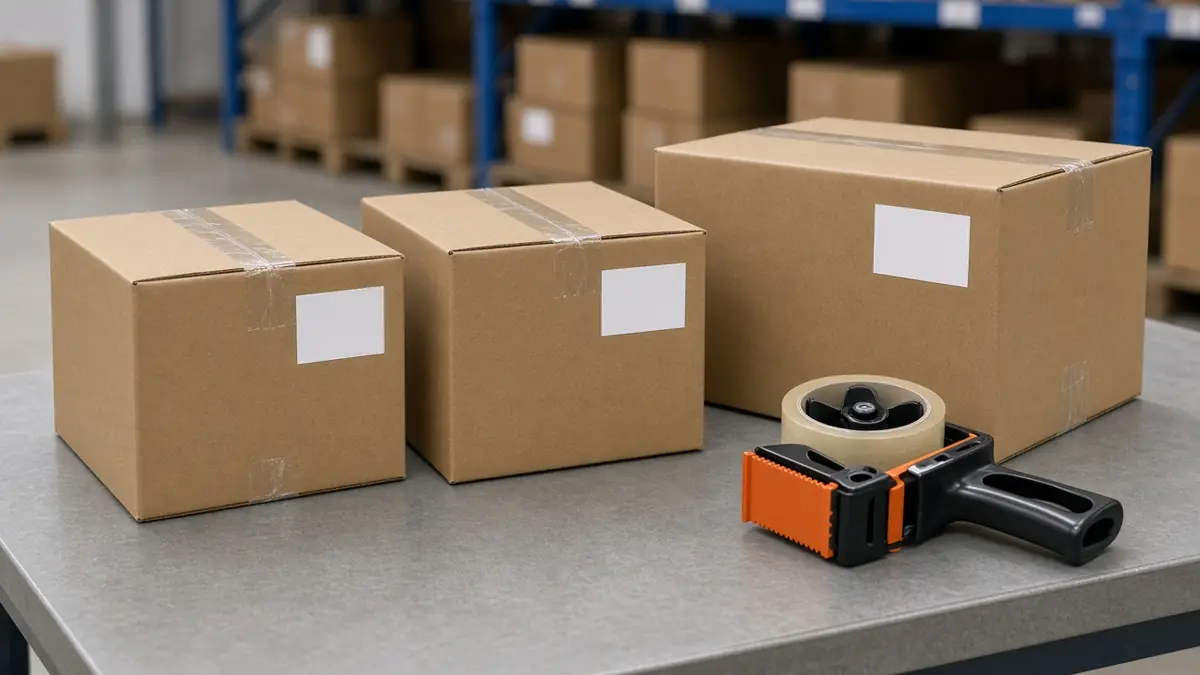
Inbound shipping is where many first shipments stall. Amazon’s shipment plan tells you how to label units and cartons, which fulfillment centers to use, and how the boxes should be packed. Those instructions change. Follow the plan in your account for that shipment, not a screenshot from last year.
Before the boxes leave, check three things yourself:
- The product in the carton matches the SKU on the label.
- Carton weight and dimensions are honest. Guessing creates receiving problems and surprise fees.
- You can afford for the inventory to sit if sales start slower than the forecast.
Units are not for sale until Amazon receives them and they become available. Build that delay into your cash plan. A shipment that looks “done” on the day you drop it off may still be in transit or in receiving.
Fulfillment after the sale
Once inventory is available, Amazon ships eligible FBA orders. Your job shifts to watching stock, price, returns, and account messages. A sale is not the end of the work. Returns can come back unsellable. Customer questions about missing parts still need a product owner who knows what was in the box.
Set a simple weekly check: units available, units inbound, rough days of cover, return reasons, and any account alerts. Reorder only when the first batch has taught you something about real demand. Reordering because the first week felt exciting is how beginners double a weak product.
Fees and costs at a high level
FBA has several cost layers. You pay for the product, for getting it to Amazon, and then Amazon charges selling and fulfillment fees that depend on category, size, and weight. Storage fees can rise when inventory sits. Advertising, prep, returns, and the occasional lost or damaged unit also belong in the picture.
Do not publish a fee table from memory. Use the fee preview in Seller Central for the exact product dimensions you measured. A product that looks profitable at the retail price can become thin after those layers.
Cash timing matters as much as the percentage. You often pay the supplier before Amazon pays you for sales. If your first order uses money you need for rent, the model is too large for your situation, even if the unit math looks tidy on a good week.

A small starting example
Imagine you are considering a simple closet organizer. The sample feels sturdy, the size matches a narrow closet, and similar products already have steady search interest. The supplier quotes a modest unit price at 200 units, which is the most you can afford to hold for a few months. You measure the packaged item, run a fee preview, and write a one-page estimate that includes freight, a return allowance, and a small test budget for ads.
The estimate shows a little room if the product sells near the prices you see, and almost no room if you have to discount heavily. You order the 200 units, photograph the real sample, and write a listing that states the exact dimensions. You do not order 2,000 units to “save on freight” until the first shipment shows whether people keep the product or send it back.
Those numbers are an illustration, not a recommendation and not Amazon’s current fee schedule. The useful part is the sequence: sample, measurement, fee preview, small quantity, honest listing, then a decision about the next order.
Common beginner mistakes
- Starting with a huge order. A first shipment should teach receiving, returns, and demand. It should not consume money you cannot replace.
- Skipping the restriction check. Approval problems are cheaper to find before the purchase order.
- Trusting a factory photo instead of a sample. The sample is the product the customer will judge.
- Ignoring size and weight. Fulfillment fees follow the packaged product, not the wishful dimensions in a spreadsheet.
- Copying competitor claims. If you cannot support the sentence, leave it off the listing.
- Treating FBA as the business. Research, sourcing, pricing, and account health stay with you.
- Spending the payout immediately. Returns and the next reorder both need cash.
Practical starting steps
- Read the fulfillment split in what Amazon FBA means, then confirm you understand offer, payment, and delivery in e-commerce basics.
- Open your seller account tools and note plan fees, identity tasks, and any category limits that apply to you.
- Pick one product idea and write the buyer, the problem, and why your version is credible.
- Order a sample, measure the packaged unit, and run a fee preview.
- Place a first quantity you can store financially if sales are slow.
- Create the listing from the sample, then build the shipment from the current inbound instructions.
- Review stock, returns, and messages every week before you reorder.
If you want those decisions taught in a structured curriculum rather than only in articles, review the Shahid Anwar Course, the current amount on Course Price, and the enrollment steps on How to Join. Lessons do not replace the sample, the fee preview, or Amazon’s own rules.
Frequently asked questions
Do I need an LLC before I start Amazon FBA?
Not automatically. Some sellers form a company for banking or contracts. Others validate a product first. An LLC does not approve a seller account. Read the LLC basics guide and use Virginia LLC formation only when you want that service. This article is not legal or tax advice.
How much inventory should a first FBA shipment include?
Enough to learn, and little enough that a slow start does not wreck your cash. There is no universal unit count. Use the quantity you can afford to hold.
Does FBA mean Amazon will market my product?
No. FBA handles storage and shipping for inventory it has received. Traffic, price, ads, and listing quality are still your decisions.
Can I start if I live outside the United States?
Many people sell on Amazon.com from outside the US, and the paperwork for identity, tax, and banking can differ. Confirm the current account requirements for your situation inside Amazon, and get professional advice for tax or company questions. This page does not provide immigration or tax advice.
Where do I check real fees?
In your seller account’s fee preview and Amazon’s current fee documentation, using the packaged size and weight you measured. Do not rely on a social media fee chart.
Conclusion
Starting Amazon FBA in the USA is a sequence of checks: a usable seller account, a product you may sell, a supplier sample that matches the listing, a fee-aware cost estimate, and a first shipment small enough to learn from. Amazon can store and ship the units after that. It cannot choose the product or protect a weak margin.
Keep the first loop small, measure the real package, and reorder only after returns and sales have taught you something. That is a slower start, and it is the one beginners can usually afford.