
E-commerce
Private Label vs Wholesale: A Beginner's Guide
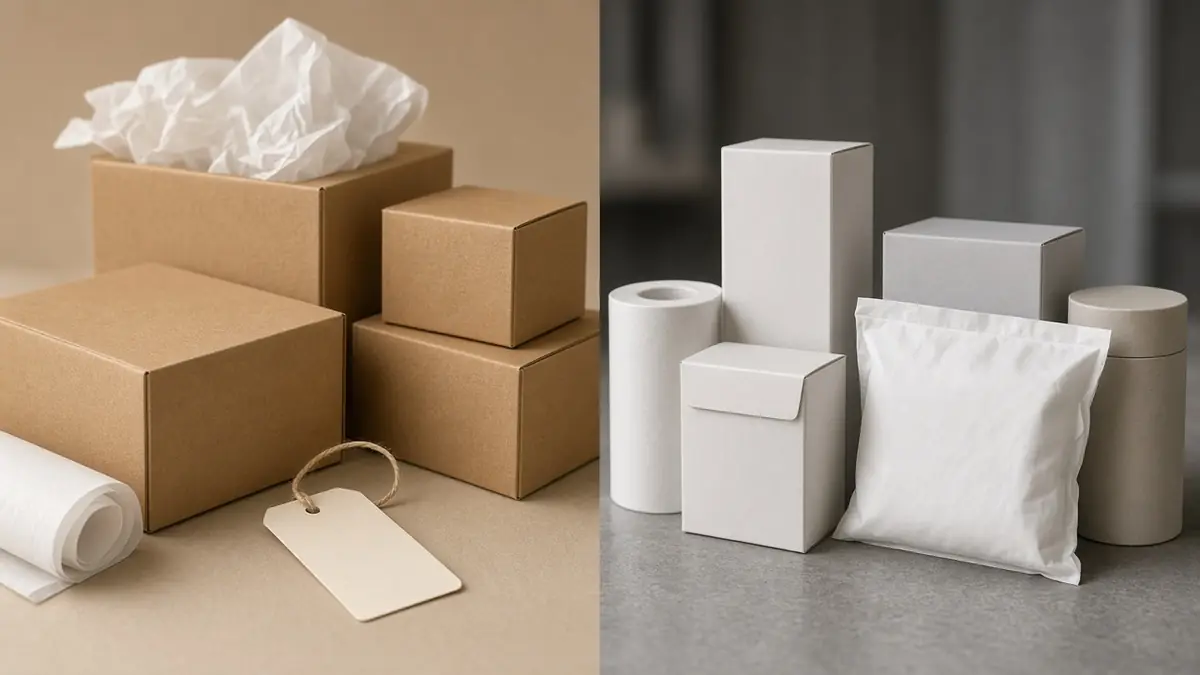
Private label and wholesale are two ways to put a product in a customer’s hands. Private label means the product carries your brand. You specify what is in the box, even if a factory makes it. Wholesale means you buy another company’s product, usually in bulk, and resell it. The customer is mostly buying that other brand.
Beginners hear both models sold as the easy path. Neither is easy by default. They move work to different places: brand building and product decisions on one side, supplier permission and thin price gaps on the other. This guide compares them without declaring a winner. How you ship — including Amazon FBA — is a separate choice. FBA can sit on top of either model. If the words FBA and wholesale still feel tangled, read Amazon FBA vs Amazon wholesale first. The sale itself still needs an offer, a payment path, and delivery, which e-commerce basics for beginners explains.
What private label means
Private label is selling a product under your own name. A factory or supplier may manufacture it. The label, the listing, and the customer relationship point to you. Sometimes you change a spec: a different size, a small bundle, clearer instructions, or packaging that matches a promise you can keep. Sometimes the base product is common and the brand is what you add. Either way, you are not merely a name on someone else’s listing.
You do not have to invent a new invention. Many private-label products are ordinary goods with a specific buyer in mind. The work is choosing a version you can stand behind, ordering a quantity you can afford, and telling the truth on the package.
What it is not
Private label is not a guarantee that the product is unique. Other sellers can order a similar item from a similar factory. It is also not the same as dropshipping, where a supplier ships one unit after each order and you may never touch the goods. Private label usually means you commit to inventory and to the brand on it.
What wholesale means
Wholesale here means buying finished goods from a brand or an authorized distributor at a trade price, then reselling them. The product design, the formula, and usually the packaging already exist. Your job is to buy cleanly, price with fees included, and deliver what the brand already promised.
A proper wholesale relationship comes with invoices and permission. A carton of goods from an unclear source, sold because the price looked low, is a different and riskier activity. Marketplaces can ask who supplied the item. If you cannot show a credible trail, the discount was not a business plan.

Product sourcing
Private-label sourcing
You look for a manufacturer or supplier who can match a sample. Ask for the unit price at your real quantity, the lead time, the packaging options, and what happens if the batch differs from the sample. Order the sample and use it. A catalog photo is not a quality check.
Because you may wait weeks for production, sourcing includes a calendar. If you promise a launch date before the sample is approved, the date owns you. Approve the sample first.
Wholesale sourcing
You look for brands or distributors that will sell to a reseller. Useful questions are the minimum order, the wholesale price, whether marketplace sales are allowed, and whether the invoice will match the goods. Some brands refuse third-party sellers. Finding that out before you pay is the whole point of the conversation.
Wholesale can move faster when the goods are already in a warehouse. It can also stop suddenly if the brand closes the account or raises the price. Your source is a relationship, not a factory you specified.
Branding
Private label asks you to be recognizable. The name on the box, the photos, and the instructions are yours. That is an advantage when customers come back for the same name. It is a cost when nobody knows the name yet. You may spend more time on photos, packaging, and a careful product page because there is no famous logo doing that work for you.
Wholesale borrows a brand customers may already trust. You usually should not redesign the product or imply that you are the brand owner. Your “brand” in this model is often your reliability as a seller: accurate condition, fair price, and stock that matches the listing. Pretending a wholesale item is your private creation is a fast way to create a complaint.
If you are naming a private-label brand, choose a name you can spell and search before you print. The naming guide on this site walks through that comparison. A wholesale business can still have a seller name, but the product brand remains someone else’s.
Inventory
Both models can tie up cash in boxes. The pattern differs.
- Private label often means a production minimum. You might not be able to buy three units. You choose a first run that you can store and afford if it sells slowly. Reordering means another lead time, so you watch stock earlier.
- Wholesale often means case packs from a distributor. You might reorder faster if the distributor has stock, and you might also be pushed toward larger cases than you wanted.
In both cases, unsold units are a cost. A private-label mistake is harder to return to the brand, because you are the brand. A wholesale mistake may be returnable only under the distributor’s rules, which are often strict. Plan the first order as a test, not as a year’s supply, unless you already have evidence of demand.
Pricing
Private-label pricing starts from your costs: product, packaging, freight, marketplace or payment fees, returns, and a reserve. You then look at what similar products sell for. If your honest cost only works at a price far above those products, the spec is too expensive or the product is not different enough to explain the gap.
Wholesale pricing starts from a smaller gap. You bought below retail, and fees take a slice of the retail price. If several sellers share the listing, the price you hoped for may not be the price you get. Run the math at a lower selling price, not only at the current advertised price. A wholesale deal that works only when you win the highest price is fragile.
Neither model should be priced from a slogan. Write the costs down. Use the fee tools of the channel you will actually sell on. Illustrative spreadsheets from social media are not your invoice.
Competition
Private-label competition is other products that solve the same problem. Shoppers compare photos, reviews, price, and whether the description matches a need. You can sometimes stand out with a clearer size, a better instruction card, or a bundle that fits one customer. You cannot stand out by claiming a feature the sample does not have.
Wholesale competition is often other sellers of the same item. The product is not your differentiator. Price, stock, and seller performance are. That can be straightforward if you have a real cost advantage and permission to sell. It can be hopeless if the only plan is to be slightly cheaper than ten other people with the same invoice.
Look at the kind of competition before you pick the model. A crowded product page is a wholesale problem. A crowded category of similar unknown brands is a private-label problem. They feel different when you open the page, and they fail for different reasons.
Control
Private label gives you more control over the listing, the package, and the reorder spec. If a detail is wrong, you can change the next run. You also cannot blame a brand owner for a promise you printed.
Wholesale gives you less control and less responsibility for the design. You generally cannot change the product. You also cannot stop the brand from selling it directly, changing the wholesale price, or limiting who may list it. Control sits with the brand. Your control is whether to buy the next case.
More control is not always better for a beginner. Control comes with decisions: materials, labels, photos, and customer questions about how the product works. Less control comes with dependence. Pick the kind of problem you are equipped to handle this year.
Operational differences
- Time to first delivery. Wholesale can be quicker when stock exists. Private label waits on samples and production.
- Customer questions. Private label questions come to you, because you wrote the promise. Wholesale questions may still come to you as the seller of record, even when you did not design the item.
- Photos and copy. Private label needs original, accurate images. Wholesale often uses the existing product page, with strict rules about what you may change.
- Records. Private label needs spec sheets and supplier agreements. Wholesale needs invoices that match the brand and the quantity.
- Fulfillment. Either model can ship from your house, a partner, or FBA when the product is eligible. The shipping method does not convert one model into the other.
Common mistakes and risks
The lists below are the mistakes that show up when beginners pick a model from a slogan. Each one is a sourcing problem, not a shipping problem.
Private-label risks
- The sample is good and the production run is not.
- You order more than demand supports because a factory minimum sounded like a discount.
- The product is too similar to existing brands, and the listing never becomes distinct.
- You print a name you did not search, then have to relabel.
Wholesale risks
- The supply is not authorized, and the account is asked for proof you cannot give.
- The margin disappears when other sellers cut price.
- The brand stops selling to you after you have built a routine around that product.
- You confuse a one-time closeout with a repeatable catalog.
Shared risks include fee changes, returns, and cash stuck in inventory. A model does not remove those. It only changes which extra risk you add.
Beginner considerations
Use your actual constraints, not a ranking of models.
- You can get a real distributor account and a small test invoice. Wholesale may be a reasonable first loop if the fee math still works at a lower price. Keep the test small.
- You cannot get brand permission, but you can wait for a sample. A simple private-label test of one product may fit better than forcing a wholesale relationship you do not have.
- You want a brand you can improve over time. Private label matches that goal, with slower feedback and more design work.
- You want to learn selling before you learn manufacturing. Authorized wholesale of a product you understand can teach fees, shipping, and customer messages with fewer design decisions.
- You are choosing because a video said one model is dead. Ignore the ranking. Check supply, costs, and whether you can fulfill five orders without chaos.
Many sellers learn one model first and add the other later. A wholesale seller might private-label a related accessory once they understand the customer. A private-label seller might wholesale a complementary brand if they can do it cleanly. Starting with both at full size usually splits attention before either loop works.
For a structured look at these models inside a course catalog, see courses. Articles can define the terms. They cannot inspect your supplier or your fee preview.
A short side-by-side example
Suppose the product is a basic water bottle. In wholesale, you buy a known bottle from an authorized source, sell that bottle, and compete with other sellers who may have the same bottle. Your questions are permission, invoice, and price after fees. In private label, you approve a sample bottle, put your name on a quantity you can afford, and compete with other bottles that solve thirst on the go. Your questions are spec, packaging, and whether anyone should prefer your version.
Same object, different business. FBA could ship either bottle. The fulfillment choice still would not decide the brand question.
Frequently asked questions
Is private label better than wholesale?
No universal answer. Private label offers more control and more product work. Wholesale offers a faster path only when you have real supply and enough margin. The better starting model is the one you can operate with your cash and your access.
Can I use Amazon FBA for both?
Yes, when the product and your account are eligible. FBA is fulfillment. Read what Amazon FBA means and how FBA differs from wholesale so the shipping choice stays separate from the sourcing choice.
Do I own the brand if I private label a factory product?
You may own your brand name and your listing if you created them and cleared conflicts. You do not automatically own the factory’s design, and a similar product can still exist. Naming and trademark questions need their own checks. This article is not legal advice.
Is wholesale the same as retail arbitrage?
No. Wholesale usually means buying from a brand or distributor on a trade account. Buying discounted retail goods from stores is a different sourcing habit with different proof and risk. This guide is about wholesale supply, not store receipts.
What should I do before I order either way?
Write the buyer, the full unit cost, and who is allowed to sell the item. Order a sample for private label. Ask for permission and a real invoice path for wholesale. Then buy a quantity you can hold if the first month is quiet.
Conclusion
Private label puts your brand on a product you specify. Wholesale resells a product someone else already designed, if you can buy it cleanly. One gives you more control and a longer setup. The other gives you less control and a tighter dependence on price and permission.
Do not pick from a slogan. Compare sourcing, branding, inventory, pricing, competition, and the risks you can actually carry. Keep fulfillment, including FBA, as its own decision. Start with one small loop, learn from the orders, and add complexity only after that loop is honest.